THE STARTUP ARENA · HELP AT THE TABLE
Frequently asked questions
Start with the basics, then look up a rule without leaving the table. Tap or use your keyboard to open any question.
Getting started
What is PLAI, and what language is it in?
PLAI is a physical, satirical startup card game with 106 cards. The physical cards and instructions are in English. It is designed in Barcelona.
What is the recommended player count and age?
The official game is for 2–5 players, ages 19+. When learning, 2–3 players are recommended: the game is more dynamic and it is easier to become familiar with the rules.
My group has more than 5 players. Can we still play?
More than 5 players is an optional variant for experienced groups, outside the official 2–5 player count. If most people have already played, you can try it, but rounds will be slower and Market Events will cause more chaos.
What are blank cards for, if my edition includes them?
If your edition includes blank cards, use them for personal experiences and burnout-healing references: bosses you survived, crises you averted, or proud moments. Choose a fitting effect together and use it as a reminder. Blank-card inclusion depends on the edition; check your product’s contents rather than assuming they are included.
Buying PLAI
Where can I buy the physical cards?
Buy the physical deck from the PLAI Cards store. Visit the product page for current contents and purchase details.
Can I download a version for two players?
Download the 2-player print-and-play PDF: 37 cards to print, cut and play. It contains five A4 front sheets and a reusable back template. For printing instructions, see the 2-player print-and-play page. The physical deck has 106 cards for 2–5 players.
What about price, availability, shipping and returns?
You’ll find current prices, availability, shipping options and return terms in the PLAI Cards store.
Common rule questions
Can I use cards gained in funding to defend myself?
No. For a Regional pitch or Venture capital funding, leave the newly drawn cards face down without looking at them, outside your hand. Defend with cards you already had. The funding prize goes to the battle winner.
What happens if I lose a Hostile Takeover?
The winner takes your remaining hand; all played battle cards are discarded. A startup with no assets becomes bankrupt at the end of the turn and continues as an Open Source Maintainer.
Who wins a tie, and when do card effects happen?
Reveal and apply defense effects first, then reveal and apply attack effects. Compare the resulting strength totals. Defense wins a tie. Follow each card’s printed effect and timing.
Is it always just four cards in a battle?
Each side chooses up to 4 initial battle cards face down. Specific anytime special cards can interrupt a battle outside those 4 cards when their text permits it.
Why do some cards have negative strength?
Their effects can be powerful enough to offset that cost. For example, some −2 cards let you remove 2 cards from your rival’s attack or defense, which can disable their play. Read the specific card text before comparing strength.
Can I bluff or bribe another player?
Yes. Low-strength cards or Buzzwords can bait rivals into spending strong defenses, and you may bribe other players for help. But Buzzwords alone lose against a valid opposing Adversary or Use Case—even if the Buzzword total looks higher.
Do maintainers get six cards each, and how does the game end?
No: all Open Source Maintainers share a maximum of 6 assets combined and discard the excess. Collaborate and talk in public. The last startup must survive their final coordinated attack to win; if the maintainers win, it is a collective victory. An empty draw pile ends the game with no winner.
Card statistics
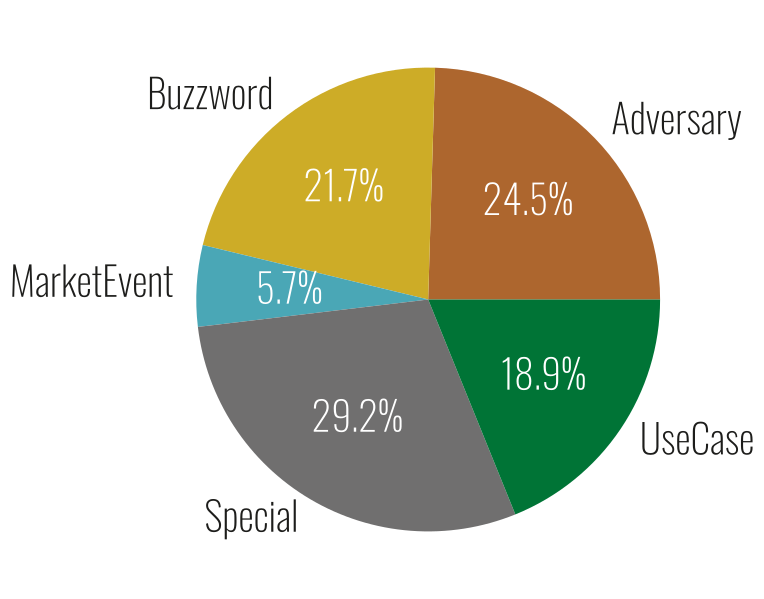
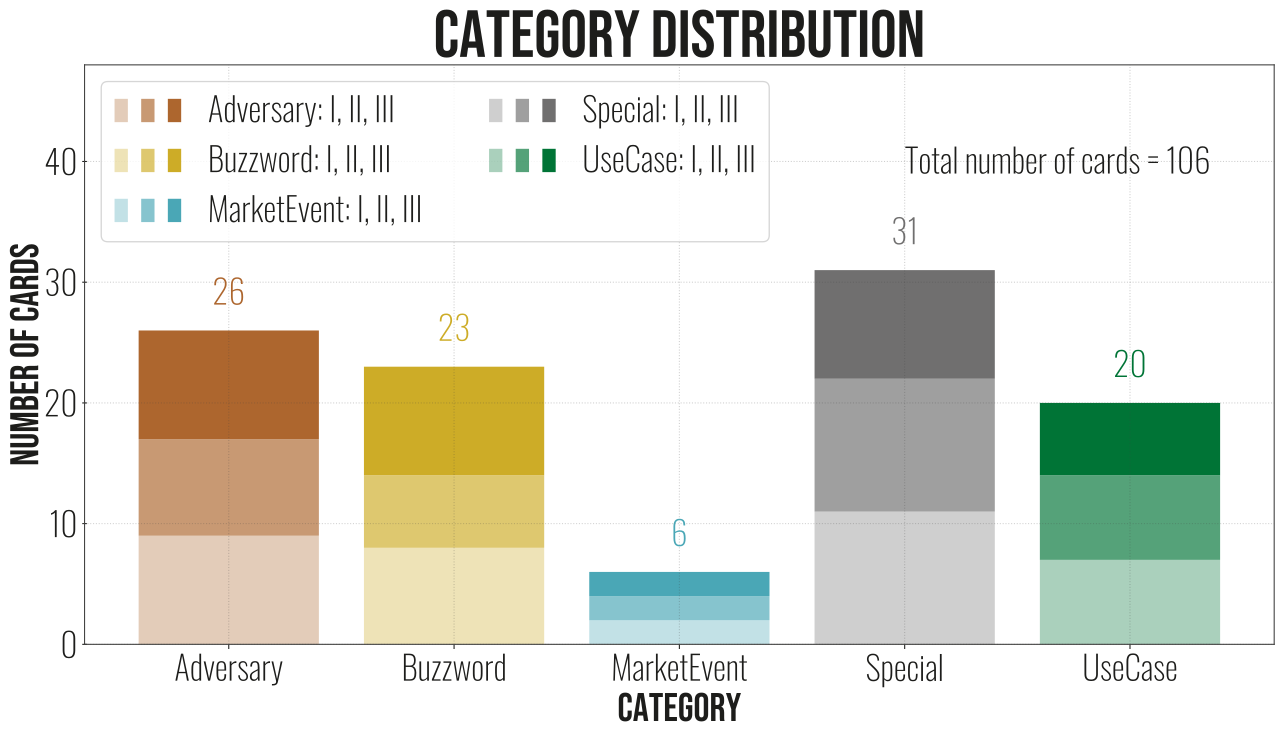
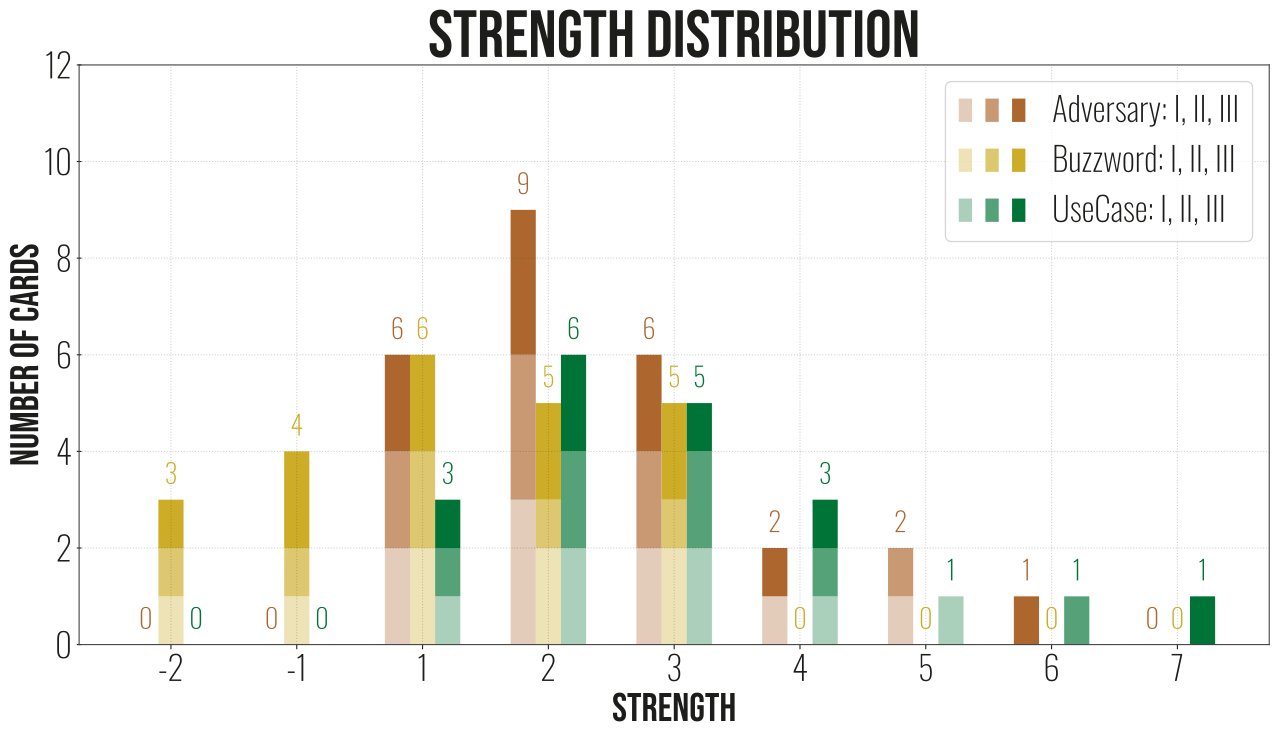
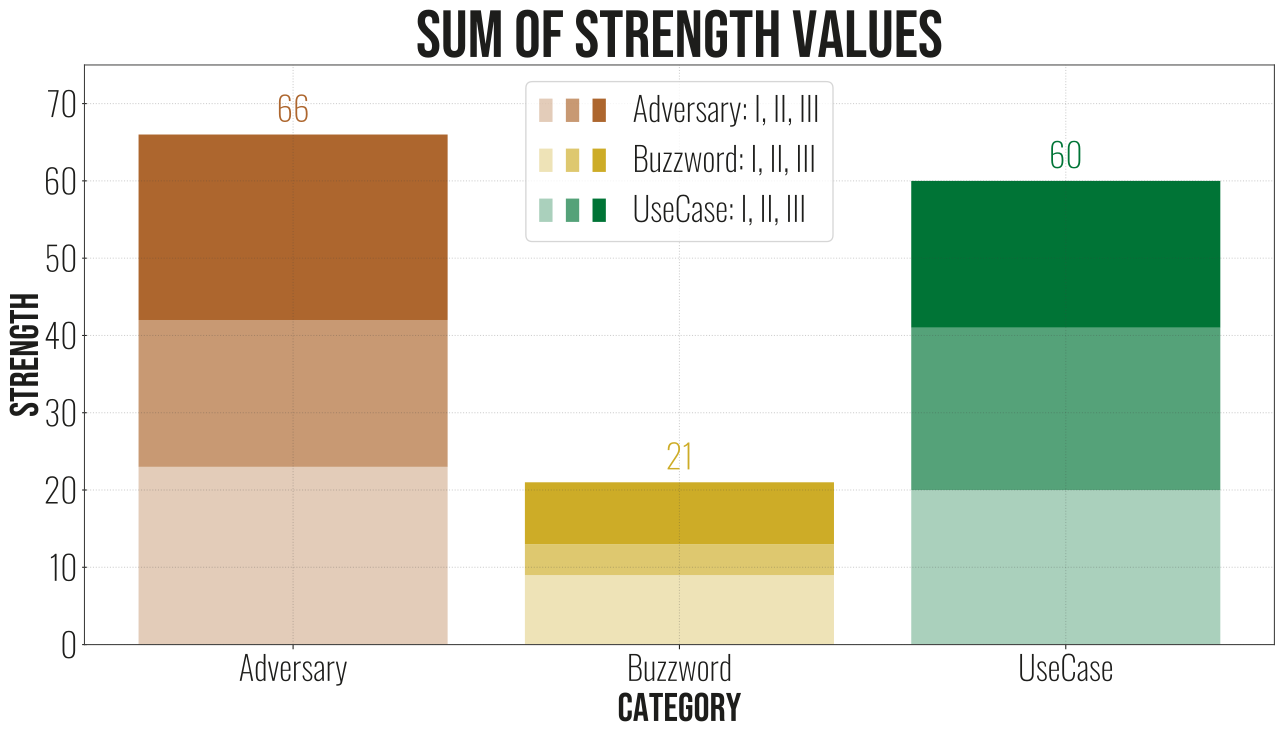
How many cards are there per group, and what are their numbers?
We like those kinds of questions! These original charts show card-group distribution and strength distributions.